

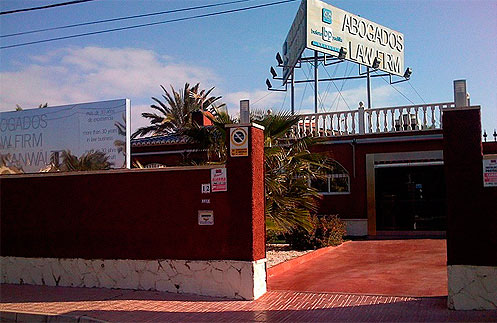
Spanish solicitors and Lawyers.
Bufete Padilla Lawyers and Solicitors with over 30 years experience in law business, formed by a group of proffesional english speaking lawyers and solicitors, who specialises in all law fields, focused mainly in foreign people who live in Spain or intend to start a business, buy or retair in Spain, providing a full service to clients.
Bufete Padilla covers a wide area including North Alicante, Torrevieja, Orihuela Costa, Ciudad Quesada and Murcia.
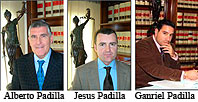
Lawyers:
Spanish Solicitors
Torrevieja (Spain)
C/. Narciso Yepes,12 (La Siesta)
Telephone/Fax +34 966 784 582
 Send message and attachament Whatsapp question and we will respond as quickly as possible, att +34 637 536 759 English, Germany or Spanish.


Civil
THE USUCAPIO OR RIGHT OF BECOMING OWNER OF SOMEONE ELSE’S PROPERTY:
I’It’s the turn to write in this weekly column of the Roman Law term USUCAPIO, which means a way to become the new owner of a property that used to belong to someone else in the past (car, furniture, house, boat, etc) after the established term by law (Civil Code) and always challenging it in Court and obtaining the Judge’s Sentence.
Now that the concept of this legal subject has been explained, it’s very important to know that this Usucapio is 2000 years old, and was firstly established and regulated by the Romans, and as Spain was conquered by this culture, and Latin has been so predominant in old Hispania during centuries, that’s why many Roman Law matters have kept until nowadays.
There are four different kinds of Usucapio: Ordinary; Extraordinary; Estate (house, piece of land) or Movable Assets or Bienes Muebles (car, motorbike, furniture, boat,…).
The regulation of the Usucapio is established in the Civil Code (CC), in articles 1931 to 1959 CC, it’s also ruled in articles 35 and 36 of the Mortgage Act (Ley Hipotecaria).
There are four minimum requirements the Usucapio must fulfil:
1.- As a Real Owner: The person who acquire the property or ownership must do it as a real owner and not as a tenant or getting the property as a gift, for example.
2.- Public possession: article 1941 CC says that the usucapiens (who takes the possession) must do it in a public and notorious way, it means he or she should not do it hiding from the current owner or neighbours.
3.- Peaceful possession: peaceful, according to the civil law means without violence at all, and without opposition by a supposed real owner, for example, an inheritor.
4.- Continuous possession: this means the usucapiens claims the property of the asset because since the beginning he or she has been possessing it and nobody has ever claimed Judicially in Court or out of Court.
Now I should let you know the most important aspect regarding this matter, which is the term. You all must make the question, for how long do I have to Possess a property to become the new owner in the Land Registry, so legally?
Here is the answer. It depends on what you have been possessing. Article 1955 CC states that the term for acquiring a movable asset, such as a car or boat is three years, always under good faith by the usucapiens, so the asset must belong to him or her legally (ordinary). And after the term of six years even without good faith, so the asset could have been stolen in case (extraordinary).
On the other hand, articles 1957, 1958 and 1959.2 CC establish three different terms to acquire a property under different requirements. An estate (land or house) could be acquired after just ten years if the former owner has not died or gone to another country. If he or she has died the term now increase ten more years, so it’s twenty years, and always considering the usucapiens’ good faith and showing a title deeds (ordinary usucapio).
And finally, article 1959 CC establishes that even if it’s not under good faith or not existing title deeds an estate could be acquired and legally transferred to the usucapiens after the term of thirty years (extraordinary usucapio).
It’s very important again to remember that all this has to be proved to the Judge and show all the evidences, as much as you can. Even water, electric, telephone or sewage bills could be enough to win the case in Court showing you have been living in the property or using the boat or car for that long.
If you have any query about the above mentioned don’t hesitate and write an email to my personal email address info@spanishsolicitorsandlawyers.com, which I’ll try to reply as soon as I can.
Anyway, if you have any queries about all the above mentioned, don’t hesitate to send me an email to my personal email address: Send e-Mail, which I´ll pleasantly reply as soon as I can.
CORPORATE
STARTING A NEW BUSINESS IN SPAIN
I’m going to explain the tour most common and usual ways of starting a new business in Spain according to Company and Civil Law.
There are mainly four ways to start a business under the Spanish companies system, the Sociedad de Responsabilidad Limitada (most common), the Sociedad Anonima, the Sociedad Civil and the Comunidad de Bienes (this last two are civil societies).
The Sociedad Limitada (hereinafter SL), or Limited Company has been the most used way of running a business in Spain for the last 25 years. This company is regulated by the 1989 LSRL Act and its amendment in force since 1995. If you are planning to start a SL in Torrevieja or nearby, for instance, you might be advised in a Gestoria or Law Firm to manage it all in The Company Registry of Alicante. Firstly, you should think of three possible names for the Company. Once you have decided about the names, a certificate of reservation for the name must be applied to the Company Registry, just in case someone else applied for the same name before you did it. If the certificate is possitive, then you are granted the first name of the list for two months. Then, you quickly should sign the New Company Escritura or Deeds in the Notary. providing the name, nationality, and fiscal domicile of the partners or shareholders, the corporate name, the corporate purpose, the corpotare domicile, the corporate capital (which must be € 3.000 minimum), the corporate term, the percentage of capital paid by each shareholder, appoint who will be the director of the company or Administrador, and the Estatutos Sociales or Articles of Association jointly with a declaration of compliance according to Law. The limited company can be started with only one member (called SLU or Sociedad Limitada Unipersonal) with the same obligations and regulations as the regular SL. The minimum € 3000 corporate capital must be completely paid up prior to sign the escritura in the Notary, so a new bank account for the company should be opened. The SL has several obligations, such as the submission of the yearly accounts to the Corporate Registrar o Alicante, an Annual General Meeting or Junta must take place at least once a year. And also the Corpate Tax (Impuesto de Sociedades) and IVA tax (in England VAT) must be declared yearly and quarterly respectively in front of the unwanted Hacienda or Tax Office.
The Sociedad Anonima or most commonly known as SA (in England PLC) is regulated under the 1564/1989 LSA Royal-Decree Act. Mostly the same requirements as the SL must be completed, such as the certificate, the signing of the Escritura in the Notary, including the Articles of Assotiation. The main difference is the amount of capital to be paid up, which is €60.000 and not the €3.000 for the SL. However, this payment is not necessary to make it 100% prior to go to the Notary, but only 25% of the corporate capital can be put into the new company bank account. It’s required by Law to establish a Board of Directors (Consejo de Administración) and ppoint one Administrator or Chairman of this Board. The General Meeting should take place within the first 6 months of the year and another extraordinary meeting can be appointed by shareholders who at least represent the 5% of the corporate capital in total. The Annual Accounts Report must be submitted to the Corporate Registrar every year, after being examined by an official Corporate Auditor, with the exception of minor companies.
It’s important to remark that both SA and SL do have separate legal entity, and the shareholders are not responsible for the debts the company may have with their own money or patrimony. This separate legal entity means the company may buy, sell, lease, mortgage, denounce, sue, etc by itself as a normal person but the Administrator is the only authorised person to do this on the company behalf.
On the other hand, the Comunidad de Bienes and The Sociedad Civil (known as CB and SC respectively) are a kind of partnerships formed by more than two partners which wish to own or run a private business. These two partnerships are regulated in the Spanish Civil Code in Articles 392 to 406 and 166 and on respectively. Both of them have become very usual and common for people to start a business because it’s faster and cheaper than the other two above mentioned SL and SA companies. It’s not necessary to sign the escritura in the Notary, but you can arrange a verbal or private contract. The partners need to be over eighteen years of age. No or minimum corporate capital is required at all. And another very important aspect to emphasize is that in the CB’s and SC’s there is not separate legal entity from its partners, so every partner is responsible for his or her own patrimony or estate if the company ows money, and there is solidary responsibily among the partners, so this means that only one of the partners could be claimed to pay the debts of the rest of the partners.
Anyway, despite the kind of company you finally decide for starting a business, it’s advisable to apply for the new business opening license (licencia de apertura de establecimiento) in the Town Hall, and if you don’t wish anybody could copy your logo or commercial name, then also apply to the Registro Español de Patentes (Spain’s Trademark Registry Office) y Marcas or to the OAMI (which is the European Registry for trademarks or firm names) located in Alicante.
Anyway, if you have any queries about all the above mentioned, don’t hesitate to send me an email to my personal email address: Send e-Mail, which I´ll pleasantly reply as soon as I can.
CONTRACTS
THE COMPLETION OF CONTRACTS
I’m going to explain the way to proceed against a developer or builder when the house is not given to the buyers on time, the problems with having the Escritura and so on, the breach of contract, according to Spanish Civil Law and the Civil Action for the performance of Contracts or acción cumplimiento de contrato.
I’m quite sure that most of you have ever signed a deposit contract by paying the developer or builder a sum of money as a deposit to book the house purchase, then in several months time took place another payment at the Notary Office and then things went normally good and with a succesful inscription in the Land Registry, so far so good, but sometimes this isn’t this way and the situation gets very complicated. Probably some of you don’t relieve me, but I can assure you that many people who paid the full amount or their houses are still waiting for the Escritura, or waiting for being given the house possesion with the keys, etc, as some of the unfortunate clients that come to my firm confirmed this to me.
When this happens, there are several steps you might take. Fisrtly, go quickly to see a Spanish lawyer to search for advice. Secondly, the lawyer should write to summons the company (builder) via Notary, which is the best and official way prior to take them to Court, and then try to reach an agreement. If there is no reply from the builder or no agreement either way, as the third step, then your lawyer should sue them by submitting a Civil Action for completion of contract, but warn your lawyer that, meantime the action is brought to Court, he should apply for recording the litigation in the Land registry in order to avoid the builder sells the house to anyone else or in case of bankruptcy. If bankruptcy comes over, your finca or property is blocked and could never be sold or taken to auction if the builder owes Money to half of the town population and then your finca will be in a safe place. Remenber that this blocking of the property will only last until your proceeding in Court is solved and finished officially under Judge’s Final Resolution or Decree.
The Action for completion of contracts, under the Spanish Law is established in the Civil Code (hereinafter C.C.), specifically in article 1.124, where is stated that “if one of the parties breaks the contract the one who is prejudiced may choose whether demanding its completion or cancelling the contract, with right to claim damages”. This Article must be related with Art. 1.258 C.C., 1.262 C.C. and 1.279 C.C. According to these articles, the contracts must be completed by real and valid mutual consent between the parties involved in it, and since then, every agreement which is stipulated will be considered as Law, with the consequences which could derive the breach of the contract.
Other articles established in the C.C. that could be taken into account are: 1.088, 1.091, 1.096, 1.098, 1.101, 1.145, 1.450, 1.461 and 7. In these part of the Spanish Civil Law Basic rights for citizens are regulated and explained. One of these rights is that the seller is required by law to give the thing to the buyer without hidden defects, otherwise the seller must pay damages. When a purchase takes place, the seller has to give completely the possesion of the thing that has just been sold to the buyer. Other aspect to explain is that a debt is not effectively cancelled until the completion of the contract occur at a 100%. Ando e of the last articles to explain (art. 7 C.C.) means that rights must be exercised according to the good faith of the claimant, otherwise he or she could be claimed for damages. (this has been literally translated from the Spanish Civil Code)
After boring you a while reading this, I should keep going with the short explanation of the procedure. Once the sue is submitted to Court, then a Preliminary Hearing comes after. You, as actor or demandante in the proceeding don’t have to go to this Hearing, only Lawyers, Procuradores and the Judge are there sit on the hearings room. If there’s no agreement, most probable, both parties, claimant and defendant are then called for the final hearing, which is required by Law to attend. And then after some months time, maybe six, you could have the final Decree and, most probably, you’ll get the keys of the house and you could move in, with some Money in your bank account after getting your damages which your Lawyer properly claimed for you and the builder paying most of your Lawyer’s fees and the rest of the costs for the procedure. Is it not a good idea?
Anyway, if you have any queries about all the above mentioned, don’t hesitate to send me an email to my personal email address: Send e-Mail, which I´ll pleasantly reply as soon as I can.
PURCHASE
The purchase in Spain. Part. 1.
I’m going to explain all the aspects of Spanish legal system in order to achieve a complete purchase in Spain. I perfectly know that many of you have tkmpurchased a house in Spain at any time, but I’d like to explain step by step the whole procedure in order not to make terrible mistakes which could bring you to Court or to face any Sanction from the Planning Authorities after purchasing your dream house.
The first thing you must do if you are buying a new house is to ask to the builder or developer for the plans of your own house with all the measures and so on, g oto the Ayuntamiento and ask for a copy of the Plan Parcial which have been approved in your area, then you can see if the urbanización or your own plot is legal and allowed to be built. The property must also be declared to Dirección General del Catastro, which is an organism that belongs to Hacienda or the Tax Office, and where all the IBIs are submitted. Make sure your Developer has the Declaración de Obra Nueva or declaration of new building settled, and the corresponding tax paid, ask to see the receipt. Also make sure your escritura or deed mentions the house you have just purchased, as well as the plot of land or finca on which stands, because sometimes only the land is referred in the deed.
Once you have all the above mentioned clear and checked you can go ahead with the purchase contract.
On the other hand, when buying a second hand property, before you even pay an eventual deposit as a reservation for the house you should see some documents from the seller:
1.- The seller’s Escritura Pública or title deed which shows the ownership of the property.
2.- A Nota Simple from the Land Registry, which is a certificate where you may check if there is any attachtment or encumbrance on the property, or if the property has any mortgage or debts. This nota simple must be a current one, and not from two or three years ago.
3.- A certificate from the Catastro where all the exact boundaries, square metres of the area and the Catastral value are given. This Spanish Catastro Registry belongs to Hacienda and is not connected with the Land Registry.
4.- A paid-up receipt of the annual IBI tax.
5.- Paid-up receipts for the annual fees of the Community of property owners, and if posible, the minutes or Acta of the last AGM.
6.- Paid-up receipts of water, electricity, waste collection, telephone, just to make an idea of what it will cost to run and own te place.
As this can be a bit tricky and tough for most of you, it’s advisable to have the helpful advice of a Spanish Lawyer or Solicitor. Then, once you have seen and checked everything, if there are no debts or encumbrances, all the bills have been paid, the escritura is all right, the price of the purchase agreed, etc., you are ready to sign the contract in the Notary Office.
Next week I’ll explain the second part of the purchase, which is the arrangements, clauses and agreements that must be included and signed by the two parties, how to inscribe the deed in the Land Registry and all the taxes affected and related to this legal subject.
Anyway, if you have any queries about all the above mentioned, don’t hesitate to send me an email to my personal email address: info@spanishsolicitorsandlawyers.com, which I´ll pleasantly reply as soon as I can.
The purchase in Spain. Part. 2.
I’m going to explain the second part of the purchase, which is the arrangements, clauses and agreements that must be included and signed by the two parties, how to inscribe the deed in the Land Registry and all the taxes involving this subjetc.
After the verbal agreement of the purchase, such as the conditions, the way of payment and the total amount to be paid, then you are now ready to write down the draft of the contract, including all the aspects of the purchase.
Prior to go to the Notary it’s very usual for the buyer and the seller to make aprivate contract, in which a deposit is paid up. This deposit can be agreed between the two parties but it’s usually about 10 per cent of the total amount. This reserves the property for the buyer until the day that the purchase is signed in front of the notary. If the day agreed the buyer does not appear in the notary, the buyer loses all the money given as deposit. But if the seller finds anyone else who gives more money than the agreed buyer, and the deposit has previously paid, according to the Spanish Civil Code, the first buyer could claim twice the amount paid back, this is called “arras”.
In the contract make sure that the property is perfectly mentioned and described. This can be checked by having a look to the Escritura of the seller and also is advisable to check the Catastro certificate, where all the physical measures, charateristics, boundaries and square metres are described. It’s also a very important item to check in your contract that the property is free of charges and liens, which means, as I mentioned last week, that there are no outstanding debts, attatchments or encumbrances such as mortgages or so on the property. The final item to include on the contratc is the final and declared amount. It’s very well known that in Spains there are lots of taxes and fees to pay, but trying to avoid them sometimes may bring you trouble. Don’t declare a ridiculous amount for the value of the house, because Spanish Tax Office, Hacienda, could start a review of the purchase six or seven months later with an inspection, this i called Comprobación de valores, and allows the Tax Office to use its own tables of values and charge you some more thousands Euros, if you don’t know what value to put in the escritura you could go to the Oficina liquidadora, located in the Land Registry where the property is inscribed and ask for it.
Once you sign the purchase or escritura publica de compraventa in front of the Notary you are ready to inscribe it on the Land Registry. The best way to do this as it the Notary itself, who can send by fax the Escritura to be inscribed. This inscription could take one month and half or two months maybe, depending o the Registry’s Bureaucracy. And it’s advisable to have a Spanish Lawyer or solicitor with you in order to supervise that everything it’s ok in all stages of the purchase and he or she will tell you the taxes you must pay.
The taxes to pay vary if you are the seller or the buyer. The seller only will have to pay the Plusvalía which is the municipal taxo n the increase in the value of your property since its las sale. But the buyer normally pays the Notary fees, the Impuesto de Transmisiones Patrimonionales, which is the Transfer Tax and may vary from each region. In Valencia Community is 7 per cent. Then the tax of the document’s fee or Stamp Duty (Actos jurídicos documentados) which is 0,5 % of the total amount. So if the purchase is between two parties and no company comes into the operation, the total taxes could reah the 7´5%. However, if a promoter company sells the property to someone IVA must be paid, and this IVA is only the 7% of the operation and must be paid by the buyer.
Next week I’ll explain how to make a lease contract or Contrato de Arrendamiento, explaining the different kinds of leasings, for example, house, premises, or seasonal lease.
Anyway, if you have any queries about all the above mentioned, don’t hesitate to send me an email to my personal email address: Send e-Mail, which I´ll pleasantly reply as soon as I can.
Taxes
NEW SPANISH RESIDENTS FISCAL DUTIES:
"Resident in Spain with Assets abroad"
Are you Resident in Spain or have you been resident during 2012 and
own assets (house, bank accounts, shares, private pensions, etc... abroad?
There is a new tax form to be submitted to Spanish Taxes Authorities, called form 720, which deadline is next 30th April 2013.
Spanish Authorities enacted a new Law (Real Decreto-Ley 6/2012, 9th
March) which determines that any person or company resident in Spain permanently or that was, at any time, resident during 2012 in Spain has the obligation to fulfill and submit the form 720, no matter your nationality, being the deadline next 30th April 2013.
There are multiple questions you might have in your mind, so that's the
aim of this brief explanatory article-letter.
Most of you residents, may still own a house, have a bank account,
shares in a limited or corporation, pension, or other rents, life insurance, then you are under the obligation to fulfill the law. If you just were resident in Spain for one single day, then regreted and cancelled this residence permit, you are still obliged.
An important aspect to highlight is that this form 720 is not like the
income tax or wealth tax, but it is an instrument issued by the Goverment, in order to control who has assets abroad and what theses assets are. I mean, if you have a million Euro or Sterling Account in London, you will not pay more than your neighbour, who was paid 60.000€ for his life pension or insurance.
So make clear is not a new tax to pay but a Tax form to present, just that.
The main requirement to submit this form 720 is to have assets valuated over 50.000€, providing the sum of each asset or group of assets. If you have 3 accounts and the three of them make 50.000€ you have to submit the form 720, if it is 49.999€, then you can stop reading from this exact moment. Inheritance assets are also obliged to be declared if the value is over 50.000€.
In the case "Mr&Mrs Smith own at 50% each a semi-detached villa in
Birmingham, which value, in tax terms (wealth tax or similar), reaches
55.000€, you might wonder if you are still obliged to do it. Despite owning each spouse 27.500€ of that house, they are still obliged to submit the aforementioned form, and one form each partner, as it is an individual tax obligation.
If you don't have an account in your country but you remember that you were authorized to manage your mom's account and the amount reached 50.000€ adding all accounts, you, as authorized must comply as well.
The law states that if you were resident for 10 years, for instance, and
signed off and abandoned Spanish residence on the 31st December 2011, then you don't have to comply with this form, as it only applies for the 2012.
What happens if I just ignore this law and form? You are in trouble.
The minimum fine or sanction the Spanish Goverment would charge you it would be 25.000€, adding 5.000€ more per non comunicated data, such as just one account you forgot, or if you on purpose misplaced a number or made a mistake, it would be 5.000€ each mistake or number ignored. But how do Spanish Government should know? And how would they charge me this enormous fine? Simple answer, Spanish Government has signed an agreement with all the EU countries and most of the NON-EU countries Spain has relations with or International Agreements.
Anyway, if you have any queries about all the above mentioned, don’t hesitate to send me an email to my personal email address: Send e-Mail, which I´ll pleasantly reply as soon as I can.
Taxes
In our offices we offer a yearly tax service, including non residents tax return, which has to be fulfilled and submitted every year before the 30th of December, even though it is recommendable to submit it before the 20th December just in case there is lack of documents, so that matter could be perfectly amended plenty of time. If you are resident you also hace the obligation to fill the income tax return, specially if you work or intend to work in Spain, in such case you have to join the Social Security System (self employed-autónomos or RETA) and the Professional Tax System (036 form)
Inheritance Tax is very important to be planned and advised before one of your family members or relatives pass away, as these taxes are quite high (could be up to 35 or 40% of the estate value) if the heir is not resident in Spain within a year before the person’s death. You should know that there is an allowance of €16.000 and on top of that the percentage could reach, as said above, 40% of the Estate. There are some ways to avoid that, one it is to become a Spanish fiscal residents, then the allowance increases to €40.000, paying only 1% of the estate on top of that. Secondly, other way it is to provide your assets or estate to a family company (limited) Spanish or British.
Our firm has got several tax experts who would analyze each particular case to give the proper advice, whether it is property transfer tax, inheritance tax, income tax or non residence tax.
Anyway, if you have any queries about all the above mentioned, don’t hesitate to send me an email to my personal email address: Send e-Mail, which I´ll pleasantly reply as soon as I can.
DIVORCE
THE NULLITY OF MARRIAGE AND FRAUD MARRIAGES:
I’m going to explain the nullity of marriage procedure according to the Spanish Laws and what has been lately happening in Spain over the past few years with fraud marriages between Spanish citizens and foreigners.
The problems regarding the fake weddings have become very common not only in Spain, but in some others countries members of the EU which are receiving lots of immigration, such as France, Great Britain, Netherlands, etc.
The latest official statistics state that for example in 2004, at least 30.000 marriages were between a Spanish citizen and a foreigner in Spain, being Madrid, Barcelona, Valencia and Alicante the Provinces with more of these weddings.
Through these kind of civil unions foreigners, after paying a sum of money to a Spanish citizen or even in some rare cases to Lawyers, who after charging an amount of 3.000€ approximately, he or she will find the beloved “spouse” to the foreigner and arrange everything in order to set the marriage and get the papers for residency in Spain ready. So the foreigners from outside the EU must think this a real business over here in Spain, such as Prostitution, which is also illegal but it’s being working for more than 100 years.
After explaining some aspects of the problematic generally arisen in Europe I’m now going to clarify some of the elements of the marriage and the causes to declare its nullity through Courts in Spain.
What’s exactly the matrimonial consent? The consent is a basic element which consists of the declaration of will of the spouses made in order to fulfil all the requirements established in the article 4 of the Civil Code (hereinafter CC), being the consent always free from any disturbance or forced.
On the other hand, article 73 of the CC states that the grounds for the nullity of the marriage are: the simulation of consent, other vices regarding the consent such as the error, the constraint and the serious fear.
Thus, to consider the consent as totally free and truthful it’s required by law that the fact of granting this consent must be conscious, free and there must be knowledge on what is being done.
Just after a fraud marriage has occurred, if this has been suspicious for any reason, because of the huge age difference between the spouses, the barrier on languages (one spouse is Spanish and the other Chinese and none of them speak each other’s language at all), etc., then the Spanish authorities such as the Judge of the Civil Registry or the General Prosecution Attorney, start an investigation procedure trying to find if there is any connection with the elements concerning the fraud or simulated marriage.
The two main purposes and interests in getting married with a Spanish citizen are: 1.- Nationality and 2.- Legal residency.
1.- Nationality: Article 22 of the CC establishes that the person married to a Spanish citizen could apply for the Spanish nationality just one year after the wedding took place, if there is not any separation or divorce proceeding filed in Court, or if both spouses still live together and always that the marriage is not being investigated by the Spanish authorities.
2.- Legal residency: According to article 17 of the General Foreigner Act, when the wedding takes place, right after the foreigner obtains automatically the legal residency in Spain, and there is no need to make this big long queue at Alicante’s or Elche’s Foreign Offices.
So there are too many advantages for people from South America, Eastern Europe and Africa in such terms of becoming the husband or wife of a Spanish citizen, of course after paying a minimum amount of 3.000€ , being even 6.000€, wait for one year getting the Spanish Nationality, and right after that disappear.
Next week I’ll explain on of the most interesting subjects in Spanish Civil Law regarding the ways to become the owner of a property after 10, 20 or 30 years, even if the property really belongs to other person. This civil matter is called Usucapión and comes from the Roman Law, so it hasn’t changed since then in some aspects.
Anyway, if you have any queries about all the above mentioned, don’t hesitate to send me an email to my personal email address: Send e-Mail, which I´ll pleasantly reply as soon as I can.
INHERITANCE
THE INHERITANCE IN SPAIN. PART. 1
I’m going to explain the different procedures reharding the inheritance in Spain according to Civil Family Law.
There are mainly two different kinds of inheritance, the Probate Proceedings and the Intestacy, and everything is regulated in the Spanish Civil Code and the Article 33 of the Spanish 1978 Constitution.
Probate occurs when the heir or heirs are appointed by the deceased testator according to his or her granted will. Wills must be granted before a Public Notary, and is recommendable to be advised by a solicitor to manage it.
On the other hand, Intestacy or “ab intestato”, occurs when there is no will granted by the deceased person and the benefiaries must be appointed by law after following several legal steps.
Both ways can be followed by agreement between all the descendants, otherwise Court would decide who gets the house, who gets the boat, car or shares of the family business, for instance. And the qualified Court will be depending where the deceased had his or her last domicile in Spain.
When the death occurs, nearest relatives, children or brothers and sisters must take over the “tanatorio” costs and the rest of the stuff regarding the death. The next step would be now requesting the famous death certificate from Civil Registry which is located in Court to apply for it. Once you get this certificate, then next thing to do is going to the Ministry of Justice department located in Murcia Town, calle Santa Catalina, 3(city centre, close to Corte Ingles store) and apply for the Last will certificate, which you’ll get on the same day after paying only €3,5 fee and filling a form. When applying this paper don’t forget to bring the death certifate with you, otherwise it might be useless the trip to lovely Murcia. This certificate you get is requested by all the Notaries in Spain to manage the inheritance and is required by Law also to start the contentious probate or intestacy proceedings in Court.
The question now is WHO IS ENTITLED TO INHERIT? The answer is that only the person that lives more than 24 hours can be a heir, and also the companies legally registered under the Spanish Laws if it’s appointed in the Will. Nevertheless, it’s also importa to take into account that some people could be impeded to inherit even though they think that are entitled to do it, this situations are called relative incapabilities or incapacidades relativas and occurs in 5 cases:
1.- Parents that abandon or corrupt their children.
2.- The one that threatens someone to grant a will to be his or her heir.
3.- If someone falsely accused the deceased of commiting a serious offence.
4.- The Notary or tutor or guardian of the testator or testatrix.
5.- If the legal heir is convicted by the Judge for attempting against the deceased’s life.
Once you are declared a future legal heir, the the acceptation or the renunciation comes next. This must take place in a document private or public, although this usually takes place in the Notary. If you decide to accept being heir, then it’s advisable to make sure you do it under beneficio de inventario, which means you only accept the assets that make profit after paying the remaining debts, then you’ll never have to pay debts, mortgages or bills from the past. This is established in article 1.023 Civil Code. And before you finally decide what to do while checking the profits or debts you are given 30 days to think of it, this is called the right to deliberate or derecho a deliberar.
If you finally decide not to be heir and so, make the corresponding renunciation declaration before the Notary, remember that you renounce to everything, you can’t renounce to only a part of the assets, the renunciation in Spain is always for the 100% of the ESTATES and assets of the inheritance.
THE INHERITANCE IN SPAIN. PART. 2
I’m going to explain how to make the division and partition of the estates and assets and several aspects regarding payable inheritance taxes.
The partition of the assets regarding the inheritance is extremely easy and simple if there is only one inheritor or heir, because only with the acceptation made before a public notary is enough, and then all the assets will be transferred into his or her name. However, the situation gets more complicated when more than one inheritor appears and there is no will granted. In this case, a “comunidad hereditaria” or inheritance community is set up until the particion is completely made. Partition consists of dividing the different assets in as many parts as inheritors appear in the inheritance community and assign to each of the heirs their legal part and share.
After reading the first parragraph, you must have many questions in your mind. Such as, WHO CAN APPLY FOR THE PARTITION OF THE INHERITANCE? WHO IS IN CHARGE FOR THIS PARTITION? WHO IS THE EXECUTOR AND WHICH ARE HIS OR HER FUNCTIONS AND TASKS? WHAT HAPPENS AFTER THE PARTITION?
I’m going to answer all these questions as brief and short as I can, taking into account that this subject is so vast and wide.
Generally, any of the inheritors is entitled to start the partition of the assets. To do this the heir should go to the nearest notary bringing the death certificate, the last will certificate, and if so, the authorised copy of the will with you and then speak with the officer in charge for advise or bring your Spanish lawyer with you if you already hired one.
The partition can be made in the will or other private or public document by the testator, always respecting the Law. Or it can be made by a person named by the testator, in Spain this person could be the “contador-partidor” or the “albacea” or executor in Legal English terms. The contador has got different and a bit more limited tasks than the executor, who is the total responsible for the partition, is the one who pays the funeral costs and bills; pays the legacies in cash; watches that all the assets are properly assigned to each inheritor; is also entiltled to go to Court to make statements to the Judge regarding the inheritance in case of dispute. The main and Basic obligation for the executor is to follow the testator’s will in order to make a successful partition.
If right now you are involved in a situation like this in Spain, and you don’t agree with the partition, or you consider yourself you have been damaged and prejudiced in more than one fourth of the total assets, remember that you can challenge this to the Court of the Town where the death took place within four years after the partition was made.
After the partition and the assignments are properly made, each inheritor is 100% owner of the assets or possesions received, responsible for paying the inheritance tax regarding his share and the obligation keeping the possesions and its deeds free from defects and encumbrances, otherwise, if any posesión appears with encumbrances or embargos, not only the inheritor who caused this but the rest of them will have to face this situation.
Now it’s turn for taxes. What percentage of inheritance tax do I have to pay in Valencia Community?. According to the new Valencia’s Inheritance Act, which came into force last January the 1st 2007, if you are the spouse, son or daughter or brother of the deceased and, of course, living and resident (with residencia card) in Spain for the last five years, then the payable amount to Hacienda would be only 1% of the Estate. If you are under a different situation, then bad news for you, because then, the payable amount would increase, depending on the amount of the Estate, reaching even 35%. So, what I advise to some of my clients is the possibility to remain still not moving anything after the death takes place and wait for four and a half years as minimum, because is the term of expiration to pay taxes (all taxes) in Valencia Regional Community. I now it’s a long time but, is it worth it to pay 35% to Hacienda? Or would you wait to pay €0? I would. I now it’s a bit tricky for a lawyer to say this, but I’m trying to make it easy for you as foreigners who don’t understand a clue about Spanish Legal System. At least, my purpose is to give you, as readers of my weekly column, the chance to pay less and save some money, with all the bills we all have to pay at the end of the month.
Anyway, if you have any queries about all the above mentioned, don’t hesitate to send me an email to my personal email address: Send e-Mail, which I´ll pleasantly reply as soon as I can.
LITIGATION
HOW TO CLAIM FOR DAMAGES AGAINST TOURIST COMPANIES
I’m going to explain several ways to proceed against tourist companies, such as travel agencies, tour operators, or even airline companies such as British Airways or Iberia, in case you consider the service you had was unfair, insufficient and ungrateful from these companies.
Firstly, I would like to explain a bit about the regulation under the Spanish Legal system regarding this matter. The regulation about this is quite scattered among some Acts and other kinds of legislation. The main Acts are the Spanish 1978 Constitution, Article 148.1.Parragraph. 18th; the 21/1995 Act, enacted on the 6th of July, which rules the planned and combined trips, and the Customers and Users 1998 Act; also some articles (from Article 1.089 and on) of the well known Spanish 1889 Civil Code, which I have mentioned many times weeks ago regarding other matters.
For example, I guess that many of you who are British, Irish or even Australian or American, may have once experienced a delay in your trip to Spain, which in some cases would have lasted 24 hours or more, losing a day of your holidays and possibly a pre paid day for hiring a car in your destination, then some questions arise, like what rights do I have? What could I do about this? Who and how do I make the corresponding claim?
If this is your case, you are entitled to get a compensation for the lost day of your holidays due to an unjustified flight delay. The amount for this compensation is not established by Law, and the Air Navigation Act only states that airline companies won’t have to pay any damages if the delay is caused by bad weather reasons, such as fog, snow or hurricane. If your flight is delayed for any other unjustified reasons, then you can claim damages to the company.
Once you have all the documents regarding the flight or the hired car, etc… ready, just bring them to Court with the assistance of your lawyer. As every case is different to the others, the Judge will issue the estimated amount the company has to pay you for damages. For example, last 23rd of April, 1999, a Resolution from Madrid’s number 13 First Instance Court issued that Iberia had to pay 313 Euros to the claimant as compensation for damages after making the customer lose one day of his holidays. On the other hand, Supreme Court in Madrid issued another Resolution on the 31st of May 2000, stating that the Airline Company should pay this time 1.503€ to the claimant for “only” ten hours delay on the flight. And lastly, once again another Resolution from other First Instance Court from Madrid issued a Resolution according to which Iberia should pay 1.500€ to the claimant for a similar case. An important matter to remind you is that for being paid the damages an official complaint must be submitted to the Airline company prior to sue them in Court. In case your luggage has been lost temporarily or has suffered damages of any kind, remember that complaint forms must be brought within 10 days for national and international flights in the first case and within 7 days if you wish to claim for damages. If there is a delay on luggage delivery you can make the complaint within 21 days.
Now is turn for “overbooking”. Overbooking occurs when Airline companies sell more flight tickets than existing passenger places are on the aircraft, so some passengers must stay at the Airport if they are not quick enough that day. What rights do you have then?
1.- The reimbursement of the ticket total price.
2.- The right to be brought or taken to the destination on the fastest way or other day chosen by the passenger.
3.- A compensation consisting of:
A.- 150€ for 3.500km flights as maximum.
B.- 300€ for more than 3.500€ flights.
4.- Besides, the Airline company should pay a telephone call or a fax to the destination to let them know your delay, buy some food and drinks for you as long as you need it whilst you are waiting, pay for a hotel room as long as you are waiting for the flight, or bring you to another Airport if necessary.
Another question you might have is, how much I am paid if the company lose my suitcase or bag? The company will have to pay you a maximum of 325€ per bag or suitcase approximately.
Lastly I’ll explain how the Obliged Traveller Insurance works here. This insurance covers all passengers compensations or medical treatment or assistance caused by an accident during the trip, or by a breakdown which affects seriously the airplane or the coach, or any kind of transport. All passengers that are in the transport meanwhile the accident takes place are covered by the insurance, but you must have the ticket or invoice with you, otherwise you may get not paid unless a witness makes a statement in your favour in case you got to go to Court. If you suffer any harm or injury during a trip by bus, train or coach, after this, go straight to see a doctor who must make a medical report on your name stating what kind of harm you had and its gravity. If you don’t need to stay in hospital, neither need a special treatment in an ambulance, the warranty will expire within 72 hours after the accident took place. If some other insurance had already been contracted by the passenger this coverage will last 10 days, and for the rest of cases the limit would be in 90 days after the accident.
Anyway, if you have any queries about all the above mentioned, don’t hesitate to send me an email to my personal email address: Send e-Mail, which I´ll pleasantly reply as soon as I can.
Nationality
EL NIE Y EL PADRON
NIE AND PADRON
Primeramente, a partir de esta semana y en colaboración con la Asociación de comunidades de Doña Pepa y lo Marabú, voy a ir escribiendo artículos relacionados con el ámbito legal y el día a día en nuestro país, ofreciéndoles desde este momento la posibilidad de aportar o preguntar cada semana cualquier duda legal que tengan, la cual contestaré y explicaré con la mayor claridad posible cada semana.
Firstly, from this week and in cooperation with the Assciation of Communnities of Doña Pepa and lo Marabú, I am going to write several articles related with aspects and different fields of the Law, so as daily life in Spain, offering you the possibility of suggesting or asking every week a different legal matter or subject which affects you or concerns you, which will be appreciated and gladly replied as clear and easy as possible.
El NIE, o Número de Identificación de Extranjeros, es un documento oficial expedido por el Gobierno español, que identifica individualmente a cada extranjero a nivel fiscal en España.
The NIE or Foreign Identification Number is an official document issued by the Spanish Government, which identifies each individual citizen for fiscal and taxes purposes in Spain.
Desde enero de 2007, en virtud de la entrada en vigor en España de una Ley de medidas contra el fraude fiscal, es obligatorio tener NIE para realizar cualquier operación económica o fiscal, ya sea en ámbito notarial o bancario. Es decir, para solicitar una Hipoteca, realizar una compraventa, aceptar una herencia, abrir una cuenta bancaria o aceptar, endosar o ingresar un cheque superior a 3.000€, para todo ello, entre otras muchas más cosas, se necesita el NIE. Por otro lado, para firmar testamentos, poderes o requerimientos, es decir aquellos actos que no conlleven operaciones económicas sólo será necesario el pasaporte de su nacionalidad en vigor.
Since January 2007, when a new anti fraud Act came into force to fight against capital fraud, is obliged and mandatory to get the NIE in order to make any kind of economical or fiscal operation, whether if it’s a notary or a bank official document to be signed. I mean, to apply for a mortgage, purchase or sale a house, accept the estate of an inheritance, open a bank account, accept, endorse or put in your account a bank cheque, for all these things, amongst other more things, it’s necessary the NIE. On the hand, to make your last will and testament, power of attorney or summon somebody the NIE it’s not necessary, as these are not economical or tax operations, in which only valid passport will be enough.
Si además de tener NIE usted es residente legalmente en España, basta con llevar consigo la tarjeta o documento oficial de residencia, donde consta también el NIE, para presentarlo y firmar en cualquier notaría.
If you are legal resident in Spain apart from having the NIE issued, bringing the residence certificate with you will be enough to present it and for signing whatever documents are necessary at the notary office.
Por lo respecta a dónde se puede obtener el NIE, por ejemplo en Torrevieja existen unas dependencias municipales donde se puede solicitar, en otros municipios más pequeños como Rojales, les envían a la Comisaría de Policía Nacional de Elche para obtenerlo. Asimismo, si se encuentra en el Reino Unido, se puede solicitar también en Embajada o Consulado General de España en dicho país. La Embajada se encuentra en Londres, así como el Consulado se encuentra en Londres, Manchester, Edinburgh y un vice Consulado en Belfast.
NIE can be obtained and issued by local authorities like in Torrevieja for instance, or in other smaller towns, like Rojales, you are sent to National Police Station of Elche. Likewise, if you are in the UK and wish to get the NIE, you can also make an application at the Spanish Embassy, located in London or the General Spanish Consulate in London, Manchester, Edinburgh or Belfast.
Por otro lado, el padrón es un documento oficial expedido por la oficina de empadronamiento del Ayuntamiento, que es un registro para inscribir a todos los ciudadanos que vivan en el municipio, a efectos tanto estadísticos como de votación en elecciones locales, regionales, nacionales y comunitarias. Si se vive en distintos municipios durante el año se deberá estar inscrito en el que se viva mayor tiempo al año.
The padron is another official document issued by the local census department of the Town Hall, which is a registry to record all the citizens who live permanently in the town, to such effect for statistical reasons, so as for local, regional, general or european elections. If you live in different towns during the year you should be recorded in the Town’s padron where you spend most of the time.
Si el ciudadano empadronado es extranjero no comunitario deberá renovar al padrón cada dos años, no siendo necesario este trámite si es ciudadano de la Unión Europea.
If the citizen holding the padron is non EU member he or she should renew it very two years, this not mandatory if you are a EU member national.
Para obtener el citado padrón es necesario aportar pasaporte y NIE(si se tiene) en vigor, así como el documento que origine el empadronamiento en el municipio, ya sea la escritura de compraventa, un contrato de alquiler o la aceptación de una herencia en la que se herede una vivienda, entre otros casos. Recuerden que dependiendo de donde se esté empadronado se le asignará un centro de salud u otro, colegio para sus hijos, etc.
Padron certificate can be obtained by providing valid passport and NIE (if you already have it), so as a document such as purchase (escritura), tenancy contract or probate documents which state you inherited a house or as property. It’s also important to remember that you will be linked and assigned a different health centre or school for your children, and that depends on where you are recorded in the local padron.
Para próximos artículos, les sugiero que manden emails con sus dudas legales o preguntas a la web de la asociación, las cuales muy agradecidamente contestaré.
For further weekly articles, I once again suggest that you could send your queries o legal questions addressed to the web site, which I will gladly reply.
Gabriel Padilla.
Abogado-Lawyer.
Manager Bufete Padilla Abogados-Torrevieja.
Anyway, if you have any queries about all the above mentioned, don’t hesitate to send me an email to my personal email address: Send e-Mail, which I´ll pleasantly reply as soon as I can.
TRAFFIC ACCIDENT
WHAT HAPPENS IF I´M INVOLVED IN A ACCIDENT?
If you ever are involved in a traffic accident in Spain you must be warned that is advisable not to sign any friendly report in which you are incurred in responsibily for the accident at all, otherwise you could state by signing that the accident occured on your fault. If you get harmed or injured in some way you should rush and go to the nearest hospital where the accident took place to have medical assistance and then, you’ll be given the “famous medical report”. This medical report is so important in order to show future evidence to the Judge that you were harmed in the accident.
There are two ways to proceed after having an accident according to the Spanish Legal System.
The first one is the criminal denuncia or denuntiation in the duty Court or Juzgado de Guardia where the accident took place. This is ruled by the LECRIM (criminal enjudgement proceeding Act) which I mentioned in last week’s column. Is important to know that you have six months to bring the denuncia to the Court although is recommendable to do it when you recover from your major injuries and go to see a Spanish Lawyer. You should also report the accident to the insurance company and give the “parte de accidente” within the first three days since the accident hapenned, then the company start all the paperwork in order to pre-study the accident and the posible damages to pay.
The denuncia has to be issued in Court only in case you are injured or harmed, this is very important to remember, because the criminal proceeding, which may be a bit faster than the civil action, is only suitable for the purpose to denounce that you suffered some injuries and harms. These injuries must be treated in Hospital and should take not only first asisstance, but this should continue for some more treatments in Hospital or in a Physiotherapist, otherwise the case would be automatically not suited and cancelled by a Judge Decree.
In a few weeks or months after the denuncia is issued in Court, your lawyer will phone you to go to see the Court forensic doctor or medico forense. He or she will check out your harms and injuries and the treatment you have received from the Hospital or “Physio” and will make an official report to the Judge with the parties involved in the lawsuit where all the consequences from the accident are emphasized. Before going to the forensic don’t forget to bring all the medical documents with you, this is so much important for the valuation of the damages, in order to get the indemnification or for the negotiation and a possible deal with the insurance company that suits you.
On the other hand, the civil action, established on the new LEC or Ley de Enjuiciamiento Cicil (Civil Proceeding Act), from the Article 437 to Article 447, enacted in 2000 and in force since Januay the first, 2001, provides an action called the Demanda de Juicio Verbal .
The maximun term to issue this demanda or civil action in Court for damages caused by an accident is one year since the accident occurred. Once the Court receives your Demanda, within the term of 5 days there will be a Resolution of allowance to go ahead with the procedure against the defendant. This Resolution, called Auto de admisión a trámite, must be officially notified to the defendant or respondant and it’ll contain the date and time for the hearing in Court. The defendant must hire a Lawyer for all the procedure or if he or she can’t afford it, after proving this to the Ministry of Justice, then a free lawyer will be awarded for defense. If you are the defendant and think the Court you were sued in is ot the right one, you can appeal this Resolution or Auto within the term of five days since you are notified. If you have some witness or witnesses of the accident that you think are relevant and important for the hearing to testify, you are given three days to appoint them.
If you, the claimant, don’t appear to the scheduled day to the hearing then you’ll be considered as desisted to the procedure and the Judge will pass a final acquittal Resolution for the defendant. And if the defendant doesn’t appear to the hearing, it’d continue anyway with its celebration.
After ten days since the hearing took place the Judge will pass the Final Judgment or Sentencia, where the total amount that the defendant must pay will be stated, and if so, the costs of the procedure will have to be paid by him or her. Anyway, this Resolution could be appealed in the Court of Appeal in Alicante or Elche (in case the hearing is in Torrevieja or Orihuela, for instance) within the term of five days. And this new proceeding could last for several months or even one or two years.
Anyway, if you have any queries about all the above mentioned, don’t hesitate to send me an email to my personal email address: Send e-Mail, which I´ll pleasantly reply as soon as I can.
Drink driving proceedings
Drink driving offence in Spain it is a very serious issue as the maximum penalty could be even jail sentence if the rate is considerable high enough according to a Judge’s criteria. If the rate is normal or low only a fine will come and possibly you´ll be taken some points out of your driving license. That will happen if your license is Spanish, but it won’t if it is British, Irish, German, etc, where no points will be deducted and only the economical fine will have to be paid.
Our firm provide full first legal assistance at Court or Police Station, followed by a quick trial proceedings (that is the way it is called) defense at the hearing. We’ll defend you in all stages, including appeals to higher Courts of Justice.
Anyway, if you have any queries about all the above mentioned, don’t hesitate to send me an email to my personal email address: Send e-Mail, which I´ll pleasantly reply as soon as I can.
Debt recovery
Arbitration in Spain is ruled under the Arbitration Act enacted in 2003, 23rd December, which came into force one year after its publication.
It is considered an alternative way to avoid Court when a legal dispute arises between two parties. Its procedure is much faster than Court, and here appears the figure of the arbitrator instead of a Judge. Arbitrator’s Resolution is also binding for both parties, and as for Court, legal costs are normally satisfied by the loser party.
It is a usual procedure used by Property Owner Communities when a proprietor owes one or several yearly community fees.
We specialize not only in Spanish Arbitration, but also have experience in the AAA Arbitration System based in New York (USA) as we have had several international cases there.
Anyway, if you have any queries about all the above mentioned, don’t hesitate to send me an email to my personal email address: Send e-Mail, which I´ll pleasantly reply as soon as I can.
Arbitration
Arbitration in Spain is ruled under the Arbitration Act enacted in 2003, 23rd December, which came into force one year after its publication.
It is considered an alternative way to avoid Court when a legal dispute arises between two parties. Its procedure is much faster than Court, and here appears the figure of the arbitrator instead of a Judge. Arbitrator’s Resolution is also binding for both parties, and as for Court, legal costs are normally satisfied by the loser party.
It is a usual procedure used by Property Owner Communities when a proprietor owes one or several yearly community fees.
We specialize not only in Spanish Arbitration, but also have experience in the AAA Arbitration System based in New York (USA) as we have had several international cases there.
Anyway, if you have any queries about all the above mentioned, don’t hesitate to send me an email to my personal email address: Send e-Mail, which I´ll pleasantly reply as soon as I can.
PATENT, TRADEMARK & DOMAIN REGISTRATION AND DISPUTES
Spanish Solicitors and Lawyers (Bufete Padilla) specializes in Trademarks, Patents and Web Domains registration and litigation disputes before Spanish Patent and Trademarks Office in Madrid, OAMI-OHIM (Alicante) which covers the whole Europe and WIPO -OMPI (Geneva, Switzerland) which covers and protects worldwide.
Expert lawyers of our law firm will manage, look after and challenge all aspects related to Intellectual Property (IP) and Industrial Property matters.
What’s WIPO-OMPI?
The World Intellectual Property Organization is the United Nations agency dedicated to the use of intellectual property (patents, copyright, trademarks, designs, etc.) as a means of stimulating innovation and creativity.
Our lawyers challenge through international arbitration system called ADR (Arbitration Administration Centre) for Patents, IP, Trademarks rights if they are violated, including a web domain site, which could be transferred or cancelled if requested and damages claimed.
OAMI-OHIM
Legally speaking, a trade mark is a sign which serves to distinguish the goods and services of one organisation from those of another.
Trade marks are words, logos, devices or other distinctive features which can be represented graphically. They can consist of, for example, the shape of goods, their packaging, sounds and smells.
Why register your trade mark?
A trade mark has three essential functions:
1.- it identifies the origin of goods and services
2.- it guarantees consistent quality by showing an organisation's commitment to its users and consumers
3.- it is a form of communication, a basis for publicity and advertising.
A trade mark can become one of the most important assets of a company.
Trade mark registration is one of the strongest ways to defend a brand; a way to ensure that no one else uses it. If you do not register your trade mark, others may do so and acquire your rights to distinguish their goods and services.
Trade marks influence consumer decisions every day. A strong trade mark creates an identity, builds trust, distinguishes you from the competition, and makes communication between seller and buyer simpler. Because so much money and time is often invested in a trade mark, it is worth paying something to protect it from misuse.
What is a good or a service?
In law, a good is any kind of item which may be traded. A service is the provision of activities in accordance with human demands.
What is the difference between a trade mark and other industrial property rights such as patents and designs?
All industrial property rights are intended to protect the creativity of businesses and individuals. However, they do not cover the same aspects.
A trade mark identifies the origin of goods and services of one undertaking so as to differentiate them from those of its competitors.
A design covers the appearance of a product. A design cannot protect the function of a product.
Anyway, if you have any queries about all the above mentioned, don’t hesitate to send me an email to my personal email address: Send e-Mail, which I´ll pleasantly reply as soon as I can.
International private law
What’s International Law? It’s the subject that rules the relationships between citizens and companies which belong to different countries throughout the world. Applying International Law we can see or decide which Court is enforceable to bring a case to or which law, Spanish or other Country’s law is applicable when a case or dispute arises.
For instance, we have dealt with International Cases of Inheritance or Divorce, Custody in which we have had to apply British Law in Spanish Courts or just the opposite, Spanish Law in a British Court, just like one Custody and Divorce case held in a Court in Wales where we had to apply for bringing the case back to Spain according to Law.
Barrier of languages is not a problem in this firm as we speak English, Spanish and German.
Anyway, if you have any queries about all the above mentioned, don’t hesitate to send me an email to my personal email address: Send e-Mail, which I´ll pleasantly reply as soon as I can.
CRIMINAL
THE DETENTION AND THE ARREST IN SPAIN
I’m going to explain all the legal aspects concerning the detention and the arrest in this country, so as your rights and obligations.
Firstly, it’s very important to make a brief and little explanation of what the detention and the arrest are exactly.
Detention means to be retained by the police or other authorities (Guardia Civil,) in some place after you have been caught up making some offence, like robbery or smuggling, etc., and Arrest means that you have been accused for making an offence and that police or other authorities have used physical strenghth and might bring you to jail and probably in some hours to see the Judge to declare in front of him or her.
When an arrest is made, the accused always must be told that he or she is being arrested and given the ground for his or her arrest. If unluckily at any time you are arrested here in Spain, you must know that you have got the same Basic Rights you have in any democratic country, such as the right to remain silent, the right to hear the charges against you, the right to legal counsel, the right to contact your lawyer or the chance to get a free Legal Assistance.
In Spanish Criminal Law, the Arrest is regulated in the Criminal Proceeding Act or Ley de Enjuiciamiento Criminal (LECRIM hereinafter)l, still in force since the 19th century, Articles 489 to 501, although some other Acts regulate it, such as the 1984 Habeas Corpus Act, the Security and Police Forces Act, or the Criminal Under Aged Act. There is also European Regulation on this matter, such as the contained in the European Convention for Protection of Human Rights, in its Article 5.
After an arrest is made some legal effects appear, such as the privation of liberty of the arrested person or the legal status of the detainee which changes completely. The right to legal counsel is established in the Article 24 of the Spanish 1978 Constitution, and is recognized as one of the main Basic Human Rights under the Spanish Legal System.
It’s also advisable for all of you to know, if you ignore the Spanish Criminal System, that not only the Police or the Guardia Civil can execute a detention, but you as normal citizens, if someone is caught by you after making a robbery or an aggression to somebody else, you are entitled to retain the guy until the Police comes and he could never denounce you for this, you use a very aggressive manner on the detention. All this is established from the Article 490 and on of the LECRIM.
The question now is, what is the maximun period or time a person can be arrested? There are three kinds of periods for the arrest, the ordinary term, the maximun ordinary term and the extraordinary term.
The first must be the strictly necessary to clarify the events which caused the arrestment, such as the identification and the declaration of the detaine.
On the other hand, the maximun ordinary term must occur only in case the Police couldn’t, by any way, clarify all the events and, according to Article 520 LECRIM, always within the first 72 hours from the arrestment, no more. If the 72 hours passed and the events are not clarified by the Police, you must be inmediately released with no charges. Anyway, if after 24 hours from your arrestment the Judge doesn’t issue another Resolution regarding your arrestment in order to extend it, according to Article 496 of the famous LECRIM, you must also be set free.
The extraordinary term only occurs when an emergency situation or an extreme state is published by the Goverment (war, conflicts, i.e.). It also occurs for the terrorist of ETA or IRA for instance, when they are arrested, the maximun period of 72 hours can be extended for another 48 hours more of arrestment if The Jugde passes the Resolution by the request from the Police if it’s thought to go ahead with further investigation, prior to the first 48 hours period. This was regulated after the amendment of the LECRIM came into force in 1988 and the Article 520 bis was added. When an Emergency State is declared by the Goverment, the arrestment can be extended up to 10 days as maximum, according to Article 55.1 of the Spanish Constitution and the LO 4/1981 Act.
If somehow you find yourself arrested for more than 72 hours please rush and call your family or ask for a lawyer or even write yourself in a piece of paper that you want to request the Right of Habeas Corpus Proceeding, although it can be provided by a free lawyer. This proceeding was established in the LO 6/1984, also in the Article 17.1 of the Spanish Constitution and the 1950 Internacional Convention of Rome for Protection of Human Rights, which is applied here since 1979 after the ratification by the Spanish Goverment.
To finish this week’s column I also would like you to know that if you think you were ilegally arrested or that Police or Guardia Civil used ilegal ways or manners you could denounce this in Court, of course with the help of a specialized Lawyer, within the term of 6 months since the arrestment took place.
If you have any queries about all the above mentioned, don’t hesitate to send me an email to my personal email address: info@spanishsolicitorsandlawyers.com, which I´ll gladly reply as soon as I can.
THE SPANISH PENITENTIARY SYSTEM
I’m going to explain some aspects and matters regarding the Spanish prisons, what rights and duties the prisoners have inside the Prison, the three different qualification degrees for prisoners, the management of the prisoner’s own money inside, etc.
Firstly, I would like, as I always do, to refer the Regulation and Law applicable and enforceable according to the Spanish Penitentiary System. The three most important Acts to take into account in this subject are: The General Penitentiary 1/1979 (hereinafter LOGP), 26th September Act, The Penitentiary 190/1996, 9th February, Regulation, the arch-well known 1978, 6th December Spanish Constitution and the 1995 Criminal Code.
The rights and duties are linked to the special reciprocal relationship that prisoners have with the Penitentiary Administration.
1.- Rights: Article 3 LOGP.
- Prisoners are able to exercise all the civil, political, social, economical and cultural rights, even the right of voting in elections, as long as this has not been prohibited by the Judge’s Resolution.
- Prisoners are also able to continue the pending civil procedures at the moment of entering the prison and they are even able to start new civil actions, such as Divorce, Claim for debts, Probate, etc, using a private or a free Estate Lawyer or Abogado de oficio.
- The Administration shall look after for prisoner’s life, integrity and health. This right is also established on Article 15 Spanish Constitution.
- Prisoners have the right to be named by their own and proper names, avoiding nick names which can be discriminatory.
- Article 6 LOGP establishes that is completely forbidden physical or psychological mistreatment to prisoners.
- Prisoners can also present official complaints for mistreatment or due to the applied regime to the Prison Authorities or to his or her legal representative.
2.- Duties: Article 4 LOGP.
- Prisoners must respect all the rules and the internal regime applied inside the Prison and complete all the disciplinary sanctions issued due to a bad behaviour or misconduct. Time tables, personal hygiene, order, cleaning, etc. must be fulfilled by prisoners.
- Prisoners must also keep a normal attitude of respect and consideration with all the Prison workers and employees, so with Judiciary Authorities.
- Lastly, prisoners must behave properly with other prisoners.
Another important issue to talk about is the three different qualification degrees for prisoners.
FIRST DEGREE. First degree prisoners are those who are extremely dangerous and are completely unable to settle with other prisoners. These prisoners are sent to a closed Regime Penitentiary Centre. The prisoners can’t go out of the prison under any circumstance.
SECOND DEGREE. In this degree are situated most of the prisoners in Spain. It’s considered the standard situation usually. The centre here is not obviously closed, but it’s called Ordinary Penitentiary. If the prisoner behaves well for such a long time and becomes a non-dangerous prisoner status (it takes some years), he or she might obtain a permission to go out from the prison for a maximum of 8 hours, all the time being supervised by a Police Officer and once a Resolution is issued by the Penitentiary Watching Judge (Juez de Vigilancia Penitenciaria).
THIRD DEGREE. According to this degree, the Centre is called Open Regime, which means a kind of weakened fulfilment of the indictment Resolution. Here you can find the less dangerous and best settled prisoners of Spain, who can work out of jail, doing almost a normal life, but going back to sleep to prison. This degree is very difficult to achieve because the prisoner must fulfil many psychological requirements, according to the report from Psychological Penitentiary Committee and also according to the Penitentiary Watching Judge, who shall issue the final terms of the permission.
Lastly, one of the main worries for prisoners when they’re sent in, it’s their financial situation, such as how do I get cigarettes or even a simple coke? Answering this, I should let you know that inside the prison, prisoners can start working, or receive money from their families. This money must be put in a Santander bank Account provided by the Prison Authorities, so the prisoner can manage and administer his own money inside by using a card very similar to a credit card we all have in our wallets. The money in prison is called “peculio”. And this deposit should be put in under this concept: “ingreso de peculio”, adding the prisoner’s full name, that’s it.
Next week I’ll explain all the types of labour and company contracts, its term, its minimal conditions, and some rights for employees and for employers.
Anyway, if you have any queries about all the above mentioned, don’t hesitate to send me an email to my personal email address: Send e-Mail, which I´ll pleasantly reply as soon as I can.
BANKRUPTCY
THE BANKRUPTCY PROCEEDINGS SINCE 2004
I’m going to explain the bankruptcy proceedings or Concurso de acreedores, some years ago known as Quiebra in Spanish language, with some important and relevants aspects of the procedure in Court, the parties involved and the functions of the Administrator
Lately, I’ve been watching the news on tv and radio and I really realized how common has become for many shoe factories and constructuion companies in Elche and region to declare Bankrupted by a Court Oder.
In my town, Elche, for example, the shoe industry has been the most influential and important in workstations and economical terms. Since three decades ago when another industry emerged, the construction industry, which established thousands of jobs and made the town grow and grow so fast reaching now in 2007 the 250.000 inhabitants. But both industries are nowadays in a deep and long crisis and some well known companies, such as Martinelli (smart shoes) and CHC (construction) have shut their doors.
After the previous introduction I made, I’m going to start explaining briefly how the Bankruptcy works here in Spain since September 1st 2004, when the Nueva Ley Concursal came into force.
What’s the Bankruptcy proceedings or Concurso de acreedores? It’s a judiciary procedure which is used to solve an insolvency situation for a debtor, who can be a person or a company also, before the creditors. After the publication of the new Bankruptcy Act, it’s not necessary to sale the debtor’s estate, but an agreement or convenio de liquidación can be made among all the creditors in order to postpone the payments.
According to Article 5.1 LC (ley concursal or bankruptcy 2003 Act), there’s obligation to declare bankrupted, because when this occurs, the debtor is no longer able to be indebted to someone else and the situation it’s the stopped by Law.
Bankruptcies can be either voluntary or compulsory. In the first case, when the debts can not be paid, the debtor voluntarily files a Petition of Bankruptcy before the Company’s Court or Juzgados de lo Mrecantil (if your company or yourself are established in Alicante Province the Court is located in Alicante City). In the second case, the creditors altogether are who file this Petition against the company when bills and due payments are not paid by the debtor at its maturity. Depending on the amount of the total debts the Bancruptcy Proceedings can be named Abreviado (1.000.000€ or less) or Ordinario (over 1.000.000€). It’s important for you to know that the debtor’s partners in the company can file the petition also.
If the Judge admits the application onsiderating the debtor as insolvent, a bankruptcy Order Resolution will be issued then within a week. If you, as a debtor, don’t agree with this Order it can be appealed in Alicante’s Court of Appeal within 20 days since the Resolution bringing as much evidence as possible that you are not really insolvent and that you could be paying your outstanding debts soon.
Who are the Administrators? Which are their functions? The Administrators are a Lawyer, an Economist and an Auditor who usually works for a bank, and all three are appointed by the Court and required by law once the Bankruptcy is passed by the Judge. Their main and basic functions and tasks are:
1.- Call a creditors’ general meeting in order to show a statement of affairs to the creditors.
2.- Make an official report to the Judge within two months since they are appointed, including a full list of debts, payments, estate, and creditors of the bankrupted company, etc.
3.- Are responsible for running all the businesses of the company, having meetings with the employees, bank managers, etc.
4.- Act as trustee to divide and assign the assests amongst the creditors at the end of the procedure.
The Bankruptcy Proceedings ends up with the final Resolution from The Court Of Appeal, or if the debtor pays all the debts according to the Agreement or convenio signed by all the creditors, debtor and the Administrators.
Anyway, if you have any queries about all the above mentioned, don’t hesitate to send me an email to my personal email address: Send e-Mail, which I´ll pleasantly reply as soon as I can.